
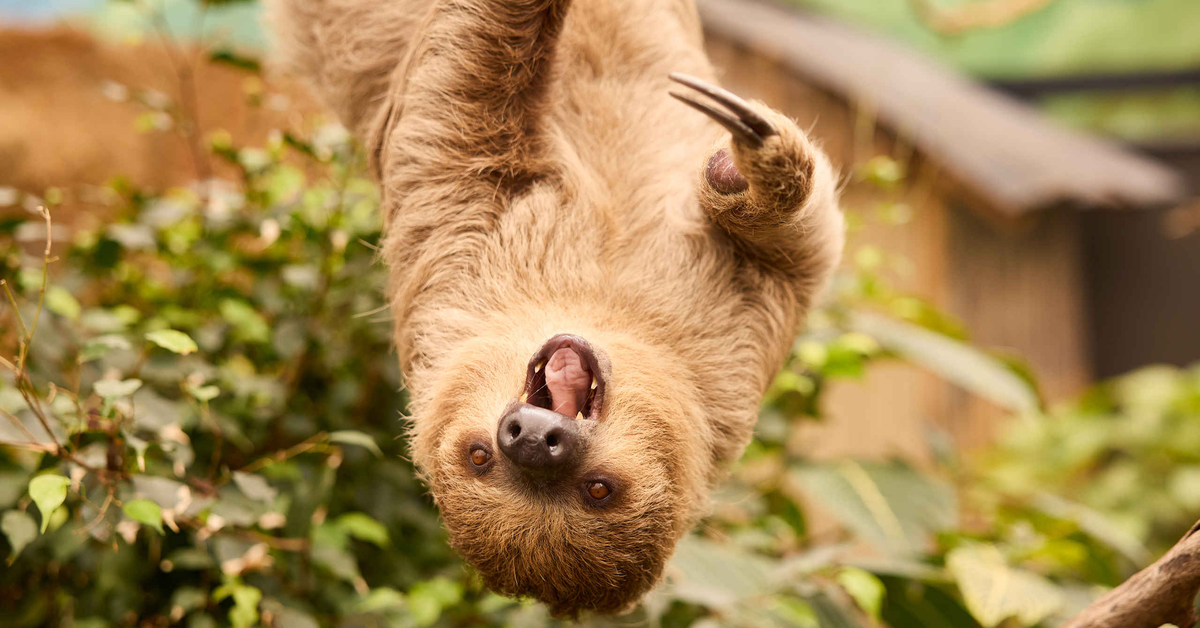
ZooParc Overloon
tourist attraction · Overloonzoo in Overloon, the Netherlands
Official siteTickets available
from$25.70
View ticketsOpening hours, prices and tickets for places worth your time.
zoo in Overloon, the Netherlands

The Black Eagle Palace is an Art Nouveau complex on Union Square, built in 1907–1908 to designs by Marcell Komor and Dezső Jakab for a hotel, casino, shops and offices. A glass-roofed passage with a stained-glass black eagle (1909) links three streets and is lined with cafés and shops; the interiors are not open to visitors.

The Royal Albert Dock is a group of five dock warehouses around a water basin on Liverpool's waterfront, designed by Jesse Hartley and Philip Hardwick and opened in 1846. Built of cast iron, brick and stone with no structural timber, the Grade I listed buildings now hold museums, galleries, shops and restaurants.

castle in Hoensbroek, a district of the Dutch town of Heerlen.

The Museum of Fine Arts and Ceramics occupies a neoclassical building on the east side of Fatahillah Square, built from 1866 to 1870 as the Raad van Justitie, the Dutch court of justice in Batavia. Since 1990 it has combined an art gallery and a ceramics museum, showing Indonesian paintings, sketches and carved totems alongside ceramics from Indonesia and abroad.

The Marble Mountains (Ngũ Hành Sơn) are five marble and limestone hills south-east of central Da Nang, named after the five elements: metal, water, wood, fire and earth. Visitors climb Thủy Sơn, the water mountain, by steps or lift to caves such as Huyền Không and Âm Phủ, pagodas and viewpoints; stone-carving workshops line the foot of the hills.

Essex Farm Cemetery is a Commonwealth War Graves Commission cemetery beside the Ypres canal near Boezinge, designed by Sir Reginald Blomfield. It holds 1,204 First World War dead next to the site of a Canadian dressing station, where John McCrae is reported to have written the poem "In Flanders Fields" in May 1915; a monument there marks it.

Flinders Street Station is Melbourne's central railway station on the corner of Flinders and Swanston Streets, on a site used by trains since 1854. The present building, designed by the railway employees James Fawcett and H. P. C. Ashworth and completed in 1909, has a copper dome, a clock tower and a row of clocks above the main entrance showing the next departures.

The Circus is a ring of large Georgian townhouses in Bath, designed by John Wood the Elder and built between 1754 and 1768. Three curved segments of equal length surround a lawn with five large plane trees, and the facades stack three classical orders: Doric, Composite and Corinthian. It was first called the King's Circus.

The Swedish Museum of Performing Arts covers music, theatre, puppetry and dance and has been housed since 1979 in the former Crown Bakery, a 17th-century building on Sibyllegatan next to the Royal Stables and the oldest industrial building in Stockholm. Its collections include more than 6,000 instruments from the early 17th century onward, stage costumes, masks and marionettes.

The Porte Cailhau is a 35-metre city gate on Place du Palais in Bordeaux, built between 1493 and 1496 as part of the medieval town walls facing the Garonne. It combines defensive features such as machicolations and arrow slits with pointed roofs and a statue of King Charles VIII; inside, an exhibition on medieval Bordeaux leads up through the tower to a view of the river.

An 18th-century masting crane at Holmen, built in 1748–51 entirely of wood inside a protective brick shell; it could lift twenty tons by manpower alone. Open with the museum ships of Skibene på Holmen, with a view over Holmen and Copenhagen.

The Capela das Almas is a chapel on Rua de Santa Catarina, Porto's main shopping street, rebuilt in the late 18th century and enlarged in 1801. In 1929 its outer walls were covered with 15,947 blue and white azulejo tiles by Eduardo Leite, made by the Viúva Lamego factory in Lisbon, showing the lives of Saint Francis of Assisi and Saint Catherine.

The Musée d'Aquitaine is Bordeaux's municipal museum of history, housed since 1987 in the former Faculty of Letters and Sciences on the cours Pasteur, built in the 1880s. More than 70,000 objects trace the region from prehistory, with the Venus of Laussel, through Roman Burdigala to the port's Atlantic trade and its role in the slave trade.

The Bourbaki Panorama is a circular painting by Edouard Castres from 1881, shown in a rotunda on Löwenplatz in Lucerne since 1889. About 112 metres long, it depicts General Bourbaki's French Eastern Army entering Switzerland at Les Verrières in 1871, at the end of the Franco-Prussian War, with three-dimensional figures and objects placed in front of the canvas.

The Mill Colonnade is a Neo-Renaissance colonnade on the Teplá river in Karlovy Vary, built between 1871 and 1881 to a design by Josef Zítek, architect of the National Theatre in Prague. Its 124 Corinthian columns shelter five mineral springs, and twelve statues on the roof terrace represent the months of the year.

Hamburger Bahnhof is a contemporary art museum in Berlin's Moabit district, housed in the former terminus of the Berlin–Hamburg railway. Part of the Berlin National Gallery, it shows post-1960s art, including large-scale installations, in its converted railway halls.

The Catacombs of San Sebastiano are an underground Christian cemetery on the Via Appia Antica, beneath the 4th-century Basilica of San Sebastiano. Guided tours lead through galleries on several levels to the crypt of the martyr Sebastian, three 2nd-century pagan mausoleums with frescoes and stucco, and the Memoria Apostolorum of Peter and Paul.

Ayasuluk Castle crowns the hill above Selçuk, a site settled since the Neolithic. Its crenellated walls and towers were raised by the Byzantines and rebuilt under the Aydınids and Ottomans; inside the partly restored circuit are cisterns, a small mosque and the remains of a bath and palace. It is reached through the Basilica of St. John on the same ticket.

Night Safari is a nocturnal zoo in Mandai, where it sits together with Singapore Zoo, River Wonders, Bird Paradise and Rainforest Wild Adventure. Opened in 1994 on 35 hectares of secondary rainforest, it shows more than 900 animals after dark, seen from a tram that crosses the park or along walking trails.